In recent years, there has been a dark horse in the field of display technology, and that is the transparent screen, which is moving from the laboratory to commercial applications at an astonishing speed. This seemingly "disappearing" screen actually carries breakthroughs in multiple disciplines such as optics, electronics, and materials. For ordinary consumers, transparent screens may still remain in the imagination of science fiction movies, but in commercial displays, retail terminals, car cockpits and other fields, it has shown unique value.
What is the principle of transparent screen?
The key to a transparent screen lies in the word "transparent". Traditional LCD screens emit light with the help of a backlight layer. However, transparent screens rely on a special optical design to allow light to penetrate the screen. The current mainstream technology route covers OLED transparent screens and LCD transparent screens. Since each pixel can emit light independently, the OLED solution does not require a backlight layer, making it easier to achieve high transparency.
The transparency of transparent screens that are often seen on the market exists in the range of 40% to 70%. This number may not seem high, but in actual application situations, it is amazing enough. When the screen is closed, it is like an ordinary piece of glass. When it is opened, images and information can be suspended on the transparent medium. This visual effect usually makes consumers stop and watch, thus producing a strong visual impact.
In terms of technical subtleties, the driving method used for transparent screens is no different from ordinary displays. The key point is how the pixels are arranged and how the light is controlled. Many engineers use sophisticated optical designs to maximize light transmittance while ensuring the display effect is achieved. Achieving this goal requires an in-depth integration of material science and display technology, which is also the most core and critical area in which various manufacturers currently compete.
What scenarios are transparent screens suitable for?
The most suitable application scenario for transparent screens is commercial displays. Imagine that on the glass windows of luxury stores, the details and stories of the products are dynamically displayed, but customers can still see the displays in the store. Such an experience that combines reality and reality cannot be achieved with traditional displays. Many brands have already regarded it as a key means to enhance their brand image.
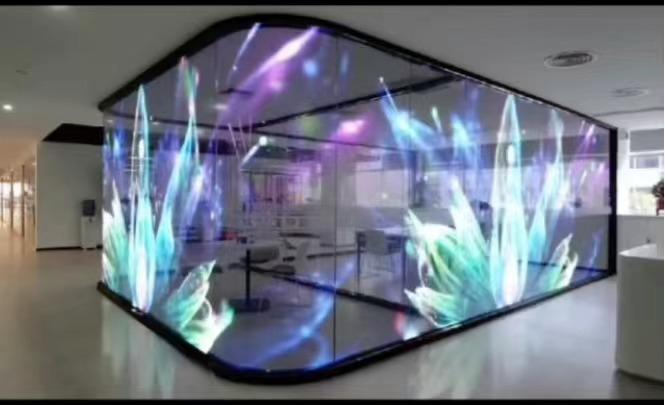
Retail terminals are rapidly embracing transparent screen technology. Self-service checkout machines, information inquiry terminals, advertising machines and other products are all experimenting with transparent screen solutions. When consumers operate the device, the products and environment behind them can be seen. This interactive experience is extremely natural and smooth. For merchants, transparent screens can achieve the "multi-use screen for one" initiative, improving display effectiveness while saving space.
Another area of special concern is the car cockpit. More and more models have begun to try to integrate transparent screens into the central control area, and even make them part of the dashboard. The driver can see the road ahead through the screen when viewing navigation information. This has improved driving safety to a certain extent. Although it is still in the exploratory stage, the potential is quite huge.
What is the future prospect of transparent screens?
What is falling is the cost of transparent screens, and it is falling gradually. As the technology matures and production capacity increases, the conditions for large-scale application are becoming mature. In the past, transparent screens were mainly limited to high-end commercial displays, were extremely expensive and had limited choices. At present, more and more manufacturers are entering this track, and the intensified competition has caused prices to drop. For ordinary consumers, it is not impossible to see transparent screens in future home scenes.
The speed of technology iteration is still accelerating. The main challenges faced by transparent screens include insufficient brightness, limited viewing angles, and relatively high costs. Various manufacturers are focusing on innovating accordingly from the multiple factors of the material itself, the multiple aspects of the structure, and the multiple dimensions of drive solution design. It can be predicted that the effects of transparent screen displays will gradually become better in the future, and the scenarios involved in its applications will also become richer.
Market research institutions predict that the transparent screen market will maintain rapid growth in the next few years. From commercial displays to retail terminals, from car cockpits to smart homes, the application boundaries of transparent screens continue to expand. For practitioners who pay attention to the development of display technology, this is a track worthy of long-term tracking.
Transparent screens are not a so-called gimmick, but an inevitable trend in the continuous evolution of display technology. When the technology reaches a certain stage, it will move from the category of high-end display to the field of mass consumption, and then become a part of our daily life.