
How To Choose An Indoor LED Company? After Reading This Pitfall Avoidance Guide
I have been involved in the LED display industry for almost fifteen years, starting from the flat panel display stage to the current Mini LED stage. I have witnessed the ups and downs of this industry throughout the entire process. When many customers find me, they are all confused. They don’t know how to choose an indoor LED company. They are worried that they will be cheated, they are worried that the price will be too high, and they are also afraid that there is no corresponding guarantee in terms of after-sales service. Today, I want to share the experience and lessons I have accumulated over the years with everyone without reservation.
Which indoor LED company is the best? Judging from these dimensions
When looking for a reliable indoor LED company, don't judge it solely based on whether the advertisement is loud or not. I have seen many customers choose small workshops just because they are cheap. However, after the project went online, problems arose one after another, and even debugging was difficult to complete. A company that is truly worthy of trust should have a complete technical team and case library. You can go to their official website to view past cases and see if they have project experience in industries similar to yours. For example, if you are engaged in shopping mall guidance work, it is best to look for a company that has done LED projects in commercial complexes; if you are doing conference room display, it will be more reliable to look for companies that have experience in hotels and office buildings.
Company size is also an indicator that can be used for reference. However, do not be fooled by the word "big factory". You need to pay attention to the fact that some OEM companies appear to be bright and shiny through careful packaging, but in fact they do not even have their own production lines and rely entirely on OEMs for shipments. This is something that needs to be paid attention to. It is recommended that you go to the factory for an on-site inspection and pay attention to see whether their SMT patch lines, aging rooms, and testing instruments have complete conditions. You know, for a regular indoor LED company, these hardware facilities are indispensable. Without these, you will not be able to effectively guarantee the quality of the product. This must be clearly understood!
In terms of qualifications, ISO certification belongs to the basic category, while export certifications such as CE certification and RoHS certification can reflect the company's standardization level. Some companies will obtain 3C certification and energy-saving certification. These are bonus points, indicating that they have strict requirements for product quality. I once encountered a company that was not large in scale. However, all members of their R&D team had professional backgrounds, and the number of patents ranked among the best in the industry. Technology-based companies like this usually have more reliable products.
How much does an indoor LED display cost? Understand this so you don’t get fooled
For indoor LED displays, which are very expensive, the price range for P2.5 screens ranges from 3,000 to 4,000 to tens of thousands per square meter. The price difference mainly comes from the core components of lamp bead brand, driver IC and control system. The lamp beads of Taiwan Jingyuan and Guanglei are much better than domestic ones, and have advantages in brightness uniformity and color reproduction. The driver IC is from Macroblock and Maxell, and the refresh rate and grayscale performance are also more stable.
The key factor that determines the price is the pixel spacing. Small-pitch screens such as P1.2 and P1.5 are expensive due to high technical thresholds and low yields. Small-pitch LEDs do not have smaller pixels, but should be selected based on the viewing distance. For close viewing scenarios such as conference rooms and exhibition halls, P1.5 to P2.5 are sufficient. If the room is larger, P2.0 or even P1.8 is a reasonable choice. Blindly pursuing small spacing will waste the budget and the actual effect may not be improved.
In addition to hardware costs, installation, debugging and software development are also hidden expenses. Some companies offer lower prices, but calculate the installation and commissioning costs separately, and the final calculated total price is roughly similar. It is recommended to choose a company that can provide package installation services. Although the unit price is slightly high, it will make people worry less overall. System software such as splicing control, content playback management, etc., some companies will provide it for free, while others will require additional fees. Be sure to ask clearly before signing a contract.
What are the application scenarios for indoor LED screens? How to choose between different scenarios
The most common indoor LED application is in conference rooms. The key point when selecting a screen is that the brightness needs to be moderate. Generally, 300 to 500 nits is enough. If it is too bright, your eyes will feel tired after watching a meeting for a long time. The refresh rate must be high enough. There should be no scanning lines when using a camera to capture conference images. It is recommended to use a P1.5 to P2.5 small-pitch screen, which has a delicate picture and clear text display.
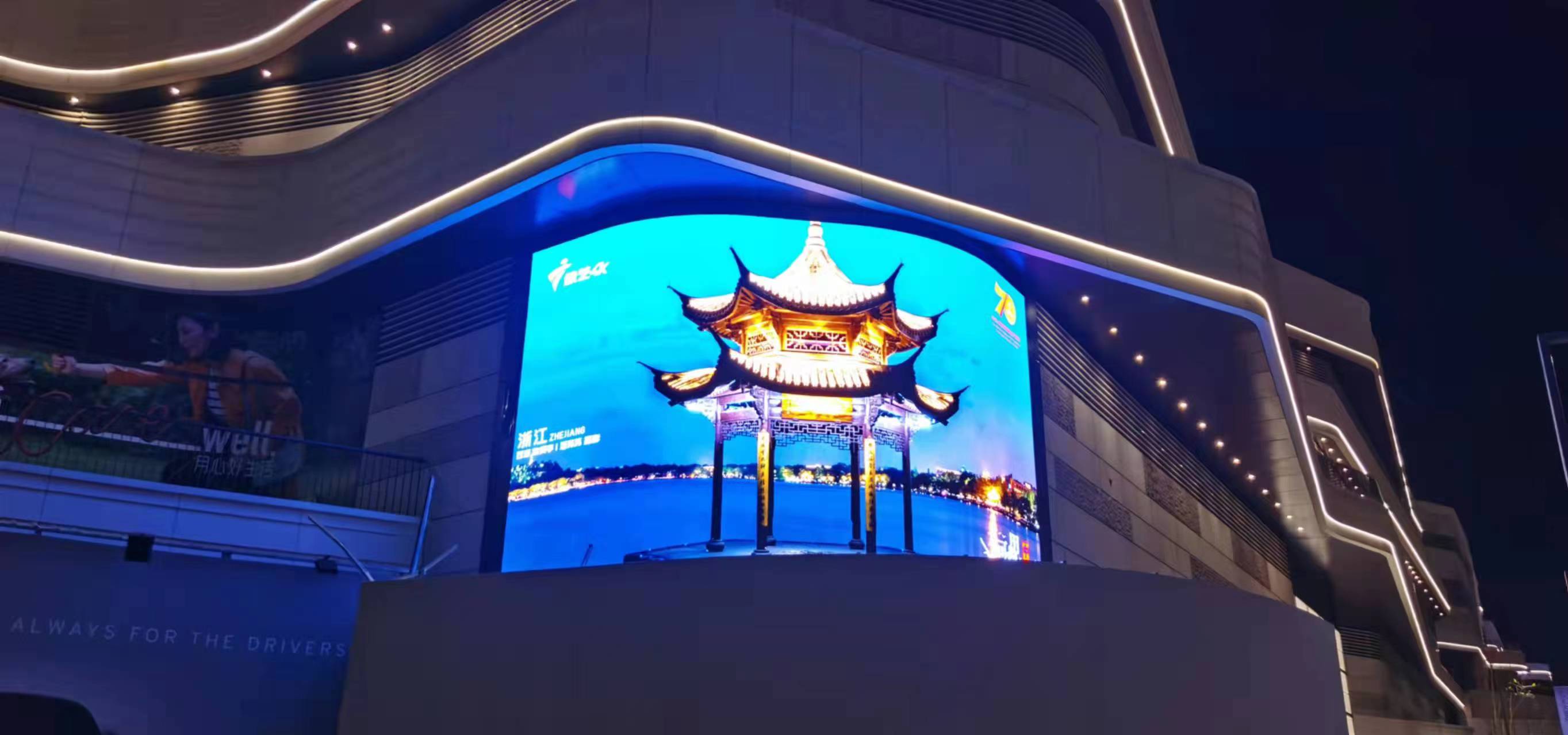
For exhibition halls, the LED screen needs are different from those of museums. Such scenes often require very large screens to create a sense of immersion and have extremely high requirements for color reproduction. It is recommended to use a high refresh model, which has a refresh rate of at least above. There will be no stripe interference when used for taking photos and videos. The brightness needs to be controlled at 500 to 800 nits. In this way, in conjunction with the lighting environment of the exhibition hall, the picture effect will be more shocking, which is not the case in museums.
For scenes such as indoor LED screens in shopping malls and retail stores that serve as brand display functions, due to their high interactivity requirements, touch and somatosensory systems should be considered. The screen size needs to be made larger and the brightness higher to ensure that it can still be clearly seen under the bright lights of the mall. Some customers expect LED screens to play dynamic advertisements and real-time promotional information, which requires confirming whether the supplier can provide a content management platform.
How about the after-sales service of the indoor LED company? Pay attention to these details
Once there is a problem with the LED display, the impact is not small. The screen goes black during a meeting in the conference room, or the screen freezes during an event in the exhibition hall. These accidents will cause huge losses. Therefore, when choosing an indoor LED company, after-sales service capabilities are a key consideration. High-quality companies will provide lifelong technical support and control failure response time within 24 hours. Some companies even promise to arrive at the scene within 4 hours.
Warranty period is also a key indicator. Under normal circumstances, the warranty period provided by regular indoor LED companies is generally in the range of 2 to 3 years, while the warranty of some high-end brands can reach 5 years. Before purchasing this product, be sure to clearly confirm the specific scope of the warranty, which covers whether only the lamp beads are covered or the entire screen is covered. At the same time, it is also necessary to clarify who is responsible for the freight in the corresponding situation. All these details should be strictly written into the contract. I have seen customers get into unfavorable situations due to related matters. The reason is that the contract did not write all these accurately and clearly. When the product was damaged, they had to bear the freight and send it back to the manufacturer for repair and treatment.
Spare parts also exist as after-sales parts. Excellent companies will stock commonly used parts in local warehouses and can quickly replace them when a fault occurs. Some companies will also provide spare complete machines to ensure that the project you are looking for will not be shut down for a long time due to failure. Even daily maintenance work is also of critical importance. Regularly arranging operations to remove dust, and inspecting and checking the status of the power supply and receiving card can greatly reduce the probability of failure.
The development trend of the indoor LED industry in 2026 deserves attention
The indoor market is being penetrated by Mini LED at an accelerated pace. Compared with traditional LED, Mini LED has higher brightness, lower power consumption, longer life, and can achieve truly seamless splicing. Many high-end conference rooms and exhibition halls have begun to use Mini LED solutions. Although its price is more expensive than ordinary LED, the cost-effectiveness is still good from a comprehensive perspective.
Micro LED, regarded as the next generation of display technology, currently has a high cost and is mainly used in top flagship projects. However, with the improvement of technology, in the next three to five years, its price is expected to drop significantly, and it can also be used in ordinary indoor applications.
Another important trend is intelligence. Nowadays, indoor LED screens no longer only display passively, but can be linked with conference room systems, security systems, and building control systems, such as automatically adjusting brightness according to ambient light and automatically switching screen content according to meeting arrangements. These intelligent functions are becoming standard. When choosing an indoor LED company, be sure to confirm whether its products support mainstream intelligent docking protocols, otherwise subsequent modifications will be extremely troublesome.



