
How To Choose A Flexible LED Screen? These Key Points Must Be Read
That kind of flexible LED screen is, to be precise, an LED display with special properties that can bend and fold. Compared with traditional hard screens, it has a very obvious difference, that is, it can be installed tightly against pillars, walls, and curved structures, and it can even be rolled up and taken away easily. Nowadays, flexible LED screens have become more and more common in shopping malls, stages, exhibition halls and other places because it can effectively break through the limitations of space. However, when many people encounter flexible LED screens for the first time, they tend to focus solely on "whether it can be bent", thus missing the subtleties that actually play a key role in the display effect.
What is the difference between flexible LED screens and ordinary screens?
Many people mistakenly believe that flexible LED is just an ordinary screen that can be bent, but this is not the case. The lamp beads, PCB board, and packaging process used are all different from ordinary screens. The PCB of the ordinary screen is a hard board and cannot be bent. If it is bent forcibly, the circuit will be disconnected; while the flexible screen uses a soft substrate, which is like plastic and can be bent repeatedly. This difference directly determines the installation method. For example, for round pillars in shopping malls, in the past, ordinary screens could only be used to piece together similar arcs, and there would be gaps. Now a flexible screen can achieve a tight fit.
However, it should be noted that the bending radius of the flexible screen is limited. It is common that it can be bent to a radius of about 50 cm. If the curvature is smaller, it must be customized. If you plan to install it on a particularly thin column, be sure to ask if the minimum bending radius can be met.
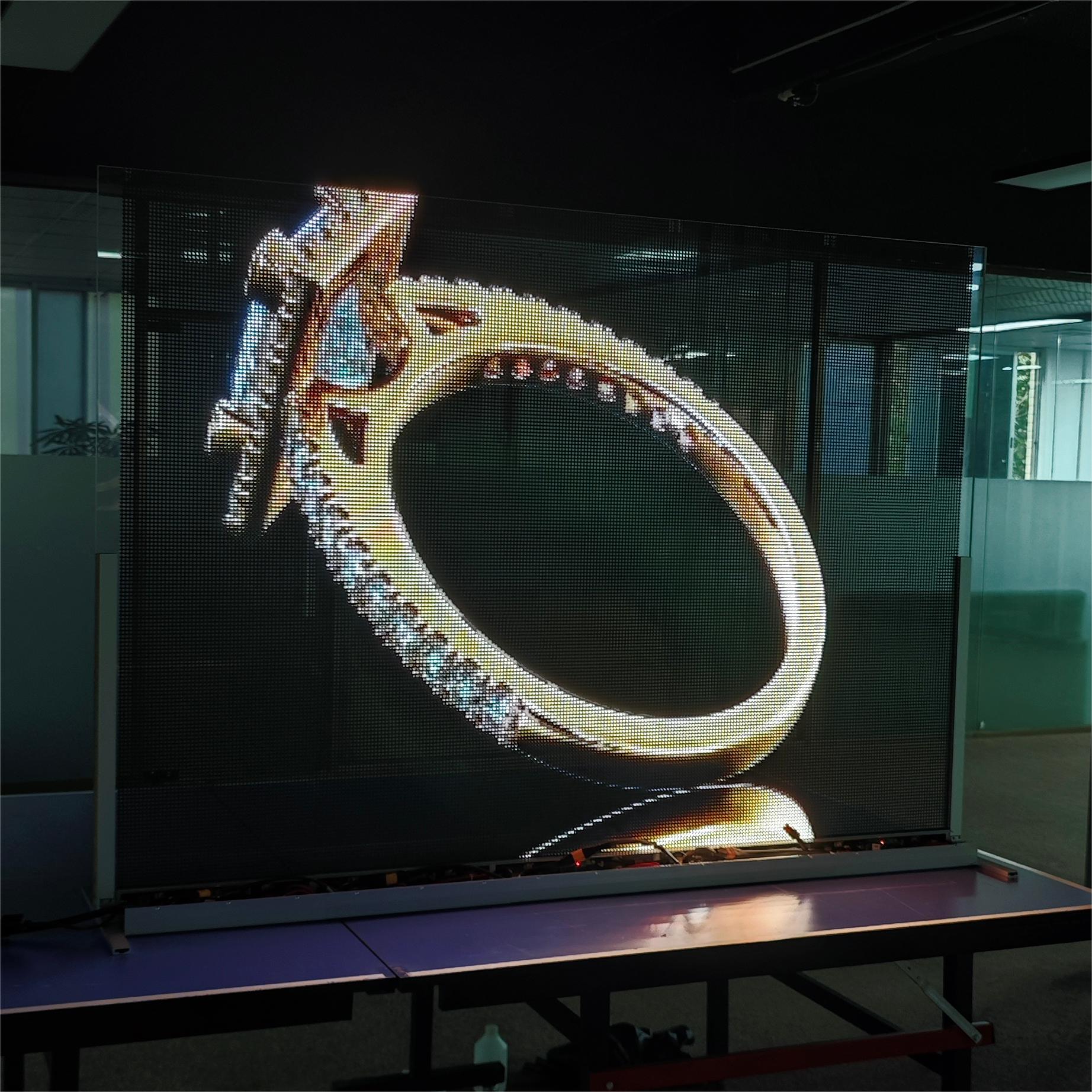
How to install the flexible LED screen after buying it so as not to waste it
The installation of flexible LED screens may seem easy on the surface, but in fact there are many traps hidden. It is obviously different from ordinary screens. Unlike ordinary screens, it can be hung casually on a simple frame. The flexible screen itself does not have a supporting structure, and its installation requirements are quite strict. It must be tightly attached to a flat installation surface, or it must be fixed with a special magnetic bracket. After many customers bought the flexible screen and installed it, they found that the screen was not flat and had obvious wavy lines. They carefully investigated the root cause, which was caused by the lack of fine leveling on the back during installation. When actually installing, you must first clean the installation surface thoroughly to ensure that no impurities remain, then carefully scrape it to a flat state, and then use the flexible screen's built-in magnets to accurately and accurately absorb each piece. If you install a flexible screen on a curved wall, you must pay special attention to whether the wall's curvature is uniform, because where the curvature changes suddenly, it is very easy for the screen to wrinkle, affecting the display effect.
In addition, the heat dissipation issue must not be ignored. The flexible screen will generate heat when working. If it is directly and closely attached to the wall, it will greatly affect the heat dissipation efficiency, which may cause damage to the screen. Therefore, it is best to reserve a ventilation gap of more than 5 cm during installation to ensure a good heat dissipation environment. In order to save trouble, some customers directly put the flexible screen on the wooden board. However, this approach is often difficult to last, and various problems will occur before long. Therefore, regarding this easily overlooked detail, you must not be careless. You must strictly follow the correct installation methods and requirements to ensure the normal use and good performance of the flexible LED screen.
The benefit of flexible LED screens lies in their flexibility, but the prerequisite is that the correct model must be selected and installed in the appropriate location. Don't be misled by the word "flexible" and think that it can be made into any shape. Before placing an order, you need to accurately measure the installation environment and inform the manufacturer of the bending requirements and heat dissipation-related conditions in detail so that they can give a specific plan. The effects of such an installation are truly worth the expense.



