
How To Choose An Indoor LED Company? Watch These Three Points And Avoid Getting Into Trouble.
In the field of indoor commercial lighting for more than ten years, I have seen too many bosses messing around when choosing manufacturers. Many people think that indoor LED companies only sell light source components. In fact, they are completely wrong. Really powerful LED companies provide full-chain light-sensing environment solutions from core light substrates, lamp units to system intelligent control. For special scenes such as shopping malls, office buildings, and campuses that are highly sensitive to light source quality control, the quality of light is directly related to the body shape of celebrities and public energy consumption control. If you choose the wrong manufacturer, you will be prone to wrangling in the after-sales process. If it is serious, the entire lighting operation system may go off track. The accompanying maintenance costs can be frighteningly high. Therefore, you cannot just look at the numbers printed on the quotation document. You must dig deep into the internal logic system and solid hard power foundation hidden on the back of the document.
Is an indoor LED company reliable? It depends on its qualifications.
To judge whether a company that makes indoor LEDs is reliable or not, qualifications are the threshold, but that is not all. You have to see whether it has quality management system certification and whether it has relevant test reports issued by the National Lighting Quality Supervision and Inspection Center. These contents are the basis. Without these, we can avoid talking about it at all. Instead, what matters more is its number of patents. A truly technical indoor LED company. There will be a lot of invention patents in controlling these drive circuits, this type of heat dissipation structure, and that kind of anti-glare design. I have seen some small workshops dare to print ISO labels to deceive customers, but in fact they don't even understand the most basic safety regulations. You have to check its patent database to see if those patents are true or false, and whether they are innovations in core components rather than design patents that fool people.
What does indoor LED company services include?
Many bosses think that buying lighting fixtures is enough. In fact, the core value of companies that specialize in indoor LED is focused on subsequent supporting services. A reliable company like this can provide preliminary illumination design services. They will use software such as this to simulate the lighting effects of your venue, calculate the lighting density, and avoid problems such as too bright or too dark. The installation process is equally important. The technical workers they send must understand the wiring of strong and weak currents, and are familiar with how to complete the lighting operation without damaging the original decoration style. There is also operation and maintenance support, such as intelligent system debugging and quick response to failures. Some indoor LED companies even provide a five-year warranty and free replacement if it breaks. This full life cycle service is their core competitiveness that distinguishes them from ordinary lighting sellers.
Why is the price difference between indoor LED companies so big?
For the same 15-watt downlight, some indoor LED manufacturers sell it for 30 yuan, while others sell it for 80 yuan. The price difference is outrageous. The actual cost mainly lies in the chip and driver. The cheaper ones use off-brand chips, and the light attenuation is great. They become darker in the first half of use, and the color rendering index is so low that my face turns blue when exposed to the light. Expensive indoor LED manufacturers are willing to use high-end chips from Nichia and Sanan. The driving power supply adopts a constant current solution. Although the unit price is high, the lifespan is long, and the energy saving effect is quite obvious. Looking at the general ledger, low-priced lights have high electricity bills and are frequently replaced, so the total cost of ownership (TCO) over three years is actually higher. So don’t be fooled by the initial quote, look at the long-term cost-effectiveness. Those indoor LED companies that cut corners on core components will have to pay the price sooner or later.
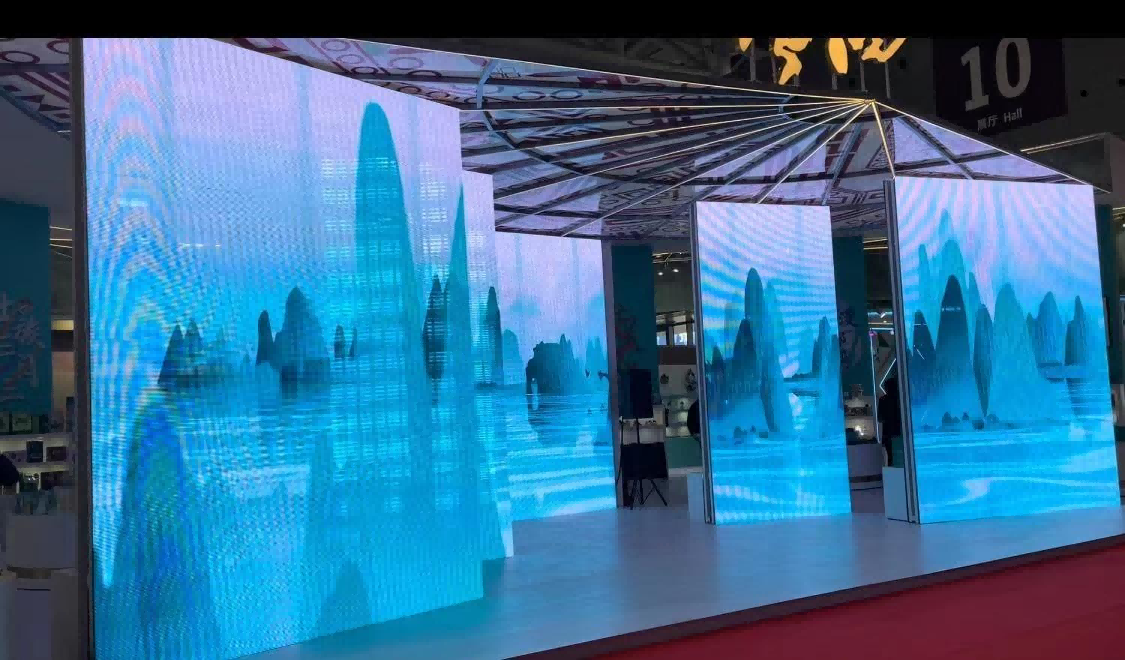
How to identify indoor LED company cases
Analyzing actual cases is the best way to test the strength of an indoor LED company. Don't just look at the high-definition photo taken, but fully inquire about the specific details - what was the specific illumination value originally planned for this shopping mall, what is the current actual measured value, whether there have been any abnormalities such as stroboscopicity, and how satisfied customers are with the project. If the indoor LED company only dares to show you PPT but cannot provide video clips taken at the project site or a third-party inspection report with formal qualifications, then you need to be more vigilant. Indoor LED companies that have really done large-scale projects have many award-winning works in their hands. You can choose one or two projects that are similar to your situation and call the customer's phone number to verify. Many indoor LED companies will fake cases or bring in other people's projects. When verifying, ask the Party A how long the lamp has been used, whether it has ever been broken, and whether the after-sales response is fast or not. These details cannot deceive anyone.
Is the indoor LED company’s smart solution worth it?
Nowadays, many indoor LED companies are promoting smart lighting, claiming that it can save 30% of electricity. It sounds very tempting, but the water inside is very deep. The real intelligence we are talking about is sensor linkage, which means that the lamp will turn off immediately when a person leaves it, and it will automatically adjust the light according to the time. It definitely does not require you to manually control and adjust the APP every day. You must consider whether the control protocol of the indoor LED company is still open, or whether it is its own private property. If it is privately owned, then if you want to switch to another company's control system in the future, you will have to completely overturn the entire current device. This is obviously a big hidden pit. It also depends on its stability, whether the wireless signal will lose packets in an environment with a lot of metal ceilings. I have seen some companies that produce indoor LED equipment. After installing the smart system, half of the lights are often disconnected. The final customer will inevitably have to use the original traditional switch. Therefore, when choosing a smart solution, you must start from scratch and test it on a small scale, and don’t do it all at once.
Indoor LED company’s after-sales response speed
If a black light can withstand the heavy flow of people in a shopping mall on weekends, how much loss will there be? Especially, who can withstand a broken light? The after-sales service of an indoor LED company is particularly concerned with speed and response after-sales service? Don't just believe in the "24-hour response" they promise, but also see if they have a localized service team. Those national chain indoor LED companies may have customer service at their headquarters, but it will take three days for a maintenance technician to come to your city, and it will be completely dark. It is best to find an indoor LED company that has warehouses and engineers stationed in your local area. They are fully stocked and on call. The indoor LED company I worked with promised four-hour delivery. They really paid attention to such details and built the spare parts warehouse in a logistics hub city. This is the litmus test for the sincerity of an indoor LED company.



