The term "transparent screen" has become increasingly common in commercial spaces in the past few years. When many people see it for the first time, they will feel that it is like a piece of glass that can suddenly project videos, making the atmosphere of science and technology completely overflowing. However, whether the actual results are excellent and whether they are worth the money cannot be judged by just watching the demonstration video. From the beginning of design to installation to daily maintenance, every step is hidden in detail.
Can transparent screens in shopping malls drive customer flow?
In shopping malls, the two places where transparent screens are most commonly seen are in display windows and elevator entrances. The difference is that traditional LED screens block people's sight very tightly, while transparent screens retain the see-through properties of glass. Customers can still see the products displayed inside, and at the same time, the dynamic content presented on the screen can attract attention. Such an effect of "not blocking but being able to shine" is naturally more topical than ordinary signboards.
In actual operations, many shopping malls install a large transparent screen at the main entrance or in the atrium. This transparent screen continuously displays brand advertisements or various interactive contents to attract customers' attention. Some shopping malls even combine cameras to carry out human-computer interaction design. For example, customers can switch displayed products by waving their hands, giving customers a novel and interesting experience.
This special format is very attractive to young customers. Many parents will stop and play with their children when they pass by. This objectively increases the time customers stay in the mall. As the stay time is extended, the entry rate of surrounding stores will also increase, thereby boosting the overall business atmosphere and economic benefits of the mall.
However, it is also important to note that not all transparent screens are suitable for placement. If the shopping mall itself has a small passenger flow, or the installation location is in a relatively remote corner, the effect will be greatly reduced. The key value of a transparent screen is that it can be seen by everyone. If the location is not good, even if the picture has ultra-high definition, it will be meaningless.
Will the installation and maintenance of transparent screens be troublesome?
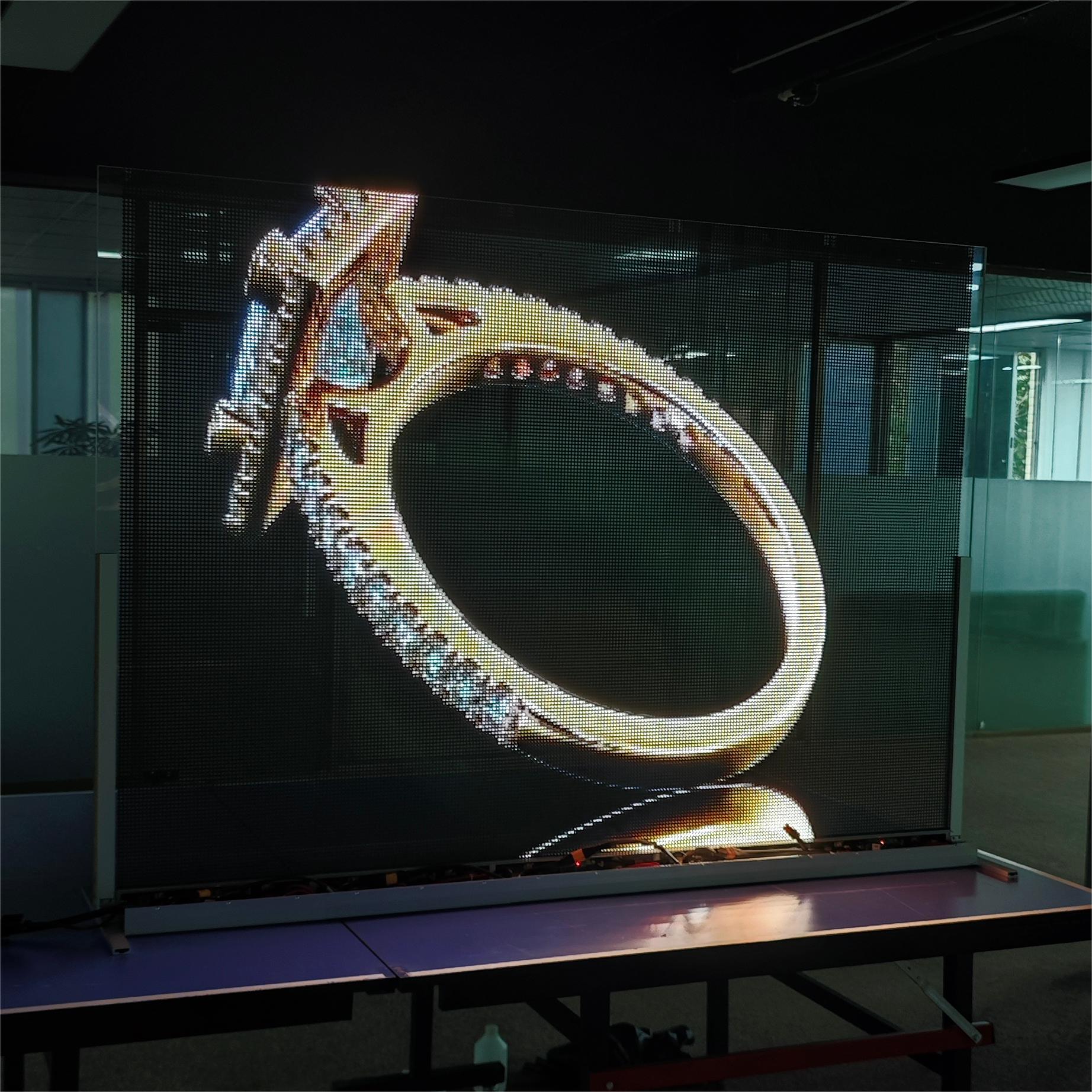
Many people wonder whether such a thin transparent screen is easy to damage, or whether it requires a particularly complicated way to install. In fact, the current transparent screen technology is relatively mature, and the modular design makes the installation process roughly the same as that of ordinary glass curtain walls. First, the steel structure skeleton is firmly placed, and then the screens are hung one by one. The wiring is all quick-connect type, so the professional construction team can complete the work within a day or two.
There are some things that require special attention when it comes to maintenance of transparent screens. The most feared thing about transparent screens is dust and liquids. The surface of the screen is made of glass, but the internal circuit is afraid of water vapor. Take a shopping mall as an example. If the shopping mall is close to an outdoor area or is at an entrance with heavy traffic, it is recommended to clean the transparent screen regularly and carefully check the condition of the sealing strips.
In daily use, as far as transparent screens are concerned, as long as they are not specifically impacted, the service life of the screen is relatively considerable. Usually the usage time indicated in official data is generally above 50,000 hours. In actual use, basically nothing will happen after three to five years of use.
There is such a situation that power consumption is easily overlooked by people. In the case of a transparent screen, it consumes much less power than a traditional LED screen of the same area. This is because its pixel spacing is relatively large and the number of lamp beads is relatively small; but no matter how it reduces power consumption, it is still a large screen after all. If it is turned on all day long, Then the electricity bill must be calculated into the operating cost; shopping malls usually open and close regularly according to business hours, which can save a lot of electricity bills.
The value of a transparent screen does not lie in how cool it is, but in whether it can help merchants or shopping malls make effective use of space. If the placement is chosen right and the content design follows suit, it can be a tool that attracts both eyes and dollars. On the contrary, if you choose the wrong application scenario, it will just be a piece of glass with a relatively high price.