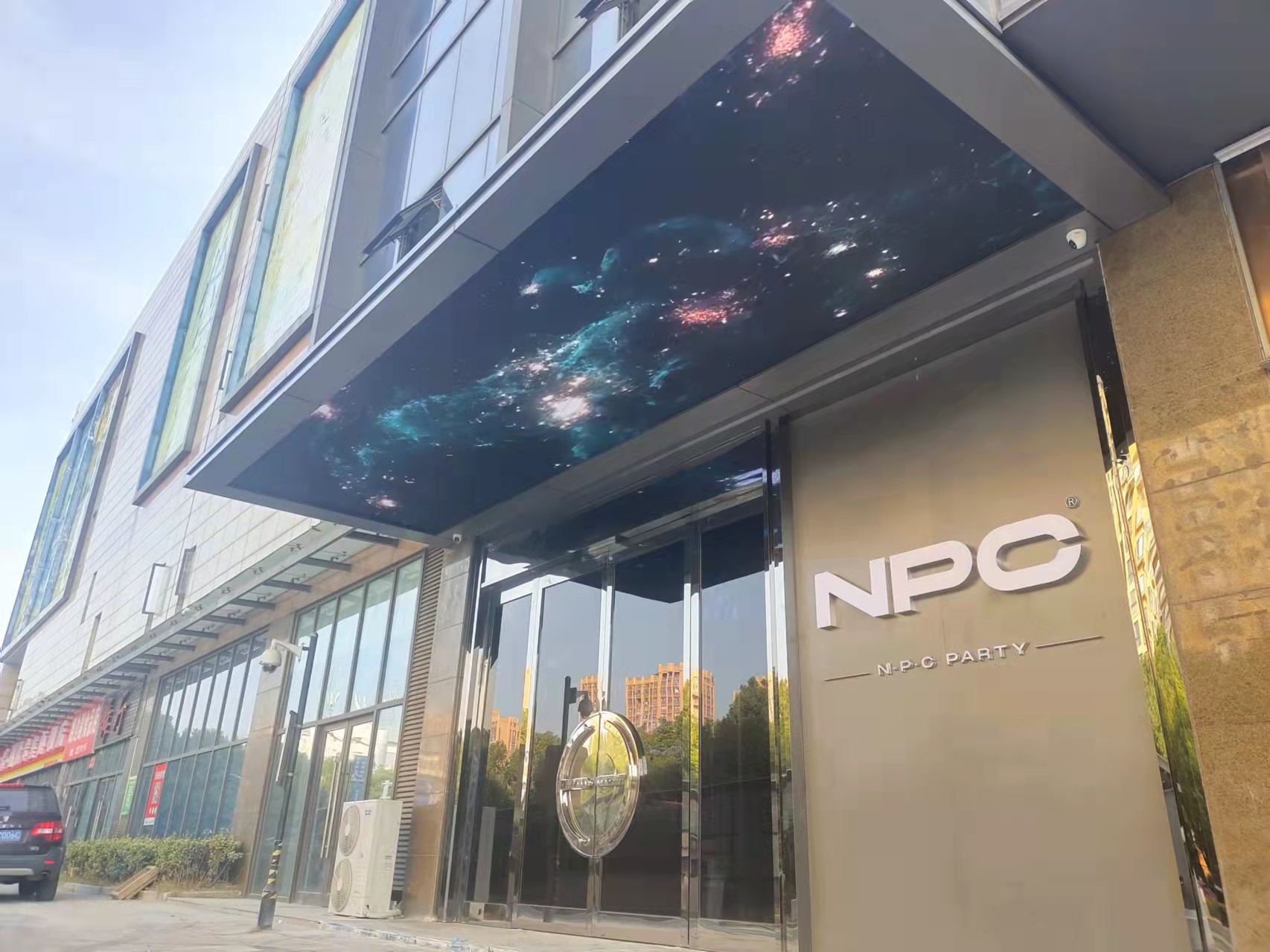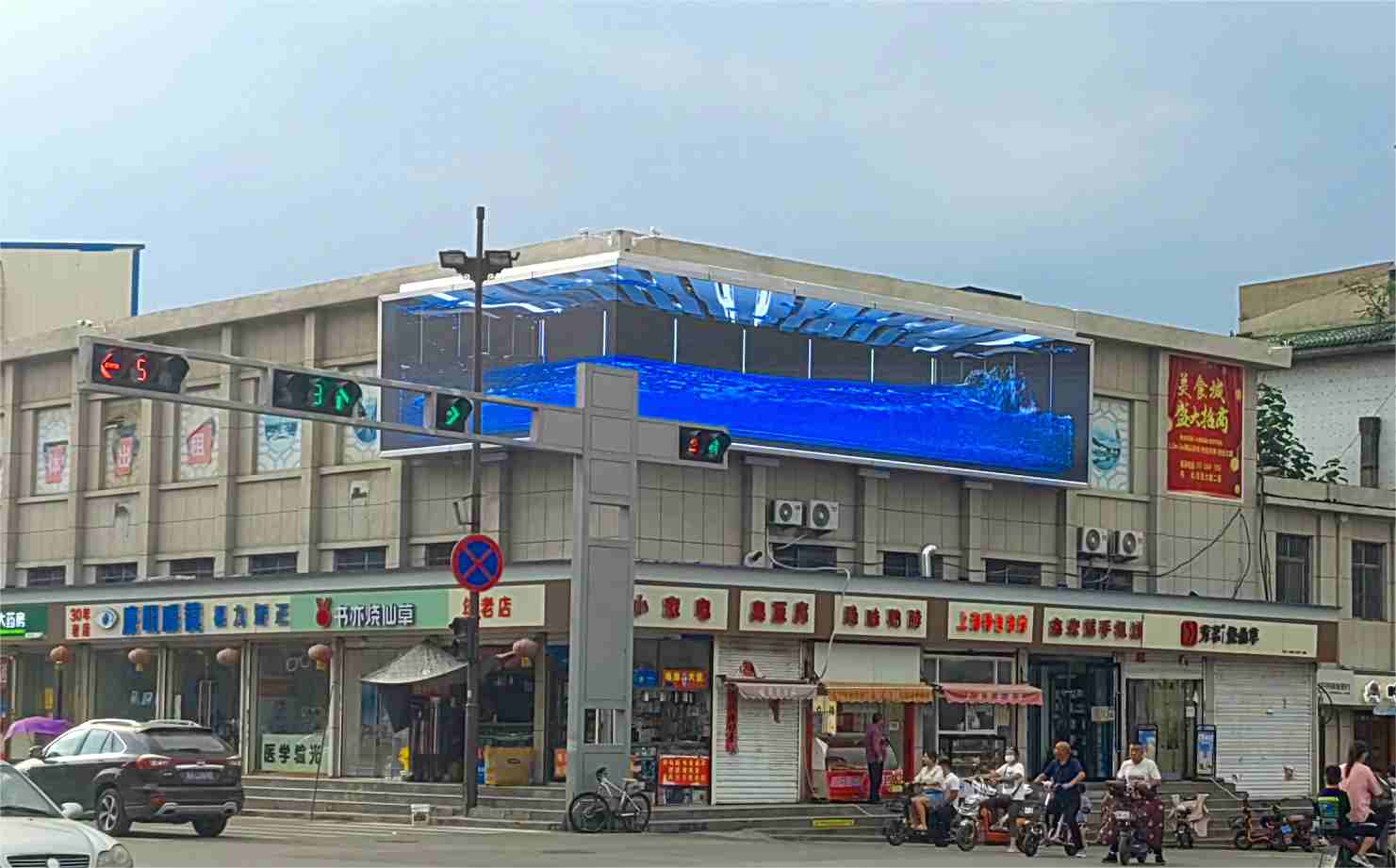
In recent years, transparent screens have appeared increasingly frequently in shopping mall windows, exhibition halls and high-end exhibition halls. When many people see them for the first time, they will be attracted by the sci-fi-like visual effects. However, when I really want to make a decision whether to adopt it, I can't help but wonder: Does this thing have any practical use, and is it worth spending the money to install it? As a practitioner with many years of hard work in this industry, I have seen too many customers transition from excitement, to hesitation, to regret or surprise, so today I will share my most real feelings without reservation.
Is the brightness of the transparent screen enough?
A large number of people saw a transparent screen for the first time in a dim indoor environment, thinking that the picture was clear and transparent, and the effect was amazing. However, once it is moved near a window or outdoors, problems arise. The essence of a transparent screen is that LED lamp beads are arranged in an orderly manner on a transparent substrate. The lamp beads themselves will emit light, but the stronger the background light, the lower the contrast of the picture. For example, under the lighting roof of the shopping mall atrium, when the sunlight is directly shining at noon, the picture displayed on the transparent screen is like that of a mobile phone screen adjusted to the lowest brightness outdoors, which is quite difficult to watch. Therefore, before choosing a transparent screen, it is necessary to accurately calculate the illumination of the installation location. In indoor areas where the light is well blocked, the transmittance can reach more than 70%, and the effect is very beautiful; however, if you are in an environment with strong light, you must either increase the brightness specification, or you have to accept the actual situation where the picture appears gray.
Furthermore, the refresh rate and grayscale are also very critical. There are some cheaper products on the market that use old solutions that look fine from a distance. However, when you look closer, you can notice screen flickering and color discontinuity. Especially in exhibition halls, when visitors come close to take pictures, the graininess and flickering of low-end transparent screens will be exposed. Those manufacturers that are truly committed to high-end projects will emphasize the above refresh rate and 16-bit grayscale, so as to maintain delicate transitions in the transparent state of the picture.
Transparent screens are easy to install and maintain
Installing a transparent screen is indeed not as simple as a regular screen. It is not an ordinary LED screen with a closed box structure that can be hung on the wall. Instead, it requires higher on-site conditions. Because its structure is hollow, the back cannot be blocked by the wall, so a certain amount of space behind it must be reserved. Many customers don’t think of installing transparent screens until the renovation is almost over. This results in the keel not being embedded in advance, and they have to build the shelves again, which consumes money and delays the construction period. Even more troublesome is cable management. If the power cables and signal cables of the transparent screen are not laid concealed, the sense of transparency will be destroyed when looking at them from the front. This is also reflected in some actual projects. There have been cases where the construction team tied the wires to the columns. From a distance, it looked like a clothesline was hung.
Routine maintenance is not very complicated, but it imposes higher requirements than ordinary screens. The lamp beads of the transparent screen are directly exposed to the air. Once dust falls on the surface of the lamp beads, it will affect the brightness. When cleaning, you cannot wipe it with a wet cloth at will. You must use an electrostatic dust removal brush or air blowing. In order to save trouble, some customers directly rinsed with tap water. As a result, the water stains penetrated into the driver IC, causing it to short-circuit and burn out several modules. In addition, the transparent screen modules are spliced by snap-fitting. If a certain lamp bead is damaged, the manufacturer will usually directly replace the entire module. However, the spare parts cycle takes about one to two weeks. During this period, a piece of the screen will be missing, which will have a great impact on the display effect.
A transparent screen is not a device that can be bought and plugged in and used. It requires intervention from the design stage. The viewing distance must be calculated, the ambient light must be calculated, the installation structure must be calculated, and the maintenance access must be calculated. If you only want to hold an exhibition temporarily, it is more cost-effective to rent it than to buy it out; if it is a commercial space that will be fixed for a long time, you can avoid many troubles in advance by finding an experienced team to make an overall plan.